Breathwork, Meditation & Sound Healing
Regulating the nervous system, restoring balance, and reconnecting people with the intelligence of their body.
I offer breathwork and sound healing experiences for individuals, couples, small groups, retreats, and wellness events. These sessions are designed to support nervous system regulation, emotional release, deeper presence, and reconnection with the body.
Breathing is something we do every moment of our lives.
Yet most people have never been taught how to breathe properly.
The way we breathe affects nearly every system in the body; including the nervous system, cardiovascular system, oxygen delivery, brain function, hormone balance, emotional regulation, and energy levels.
When breathing patterns become dysfunctional, which is extremely common in modern life, the body can shift into chronic stress states that impact everything from mood and focus to sleep, digestion, and long-term health.
At the same time, intentional breathing practices have been used for thousands of years across cultures for healing, resilience, emotional processing, and spiritual development.
Modern neuroscience and physiology research are increasingly exploring how breathing patterns influence the nervous system, emotional regulation, and metabolic function, something traditional practices have understood for centuries. Breathwork, meditation, and sound-based practices offer powerful ways to regulate the nervous system, restore balance, and reconnect people with the natural rhythms of their body.
My work combines these practices in a grounded, trauma-informed way that is accessible for individuals, families, workplaces, and communities.
Your Breathwork Experience Starts Here
Book a private breathwork experience for your home, cottage, retreat, or event, or explore working together one-on-one. Each session is fully customized based on your group, your intention, and the type of experience you want to create.
Click below to plan your experience and go over details.
Upcoming Breathwork Events & Experiences
Public breathwork, visualization, meditation, and sound healing sessions held in Downtown Barrie.
If you’d like to join an upcoming session, you can view the full schedule and reserve your spot below.
Certified Breathwork Facilitator
I am a Certified Elemental Rhythm Breathwork Facilitator trained in trauma-informed breathwork practices that support emotional regulation, nervous system awareness, and deeper self-connection.
My work is also informed by my background in:
• master coaching
• NLP and subconscious pattern work
• hypnotherapy and emotional change techniques
• nervous system regulation
• holistic nutrition and metabolic health
• plant medicine preparation and integration work
• sound healing and somatic relaxation practices
These modalities complement each other.
Breathwork opens the body.
Meditation focuses the mind.
Sound helps the nervous system settle and integrate.
When combined thoughtfully, they can create powerful experiences that support emotional release, clarity, resilience, and deep relaxation.
The Three Modalities I Work With
Breathwork
Sound Healing & Vibrational Therapy
Meditation & Visualization
Breathwork works directly with the body’s physiology through controlled breathing patterns that influence oxygen and carbon dioxide balance, heart rate variability, vagal tone, and nervous system activation.
Different breathing styles can activate energy, release emotional tension, or bring the body into deep parasympathetic relaxation.
Meditation & Visualization
Sound Healing & Vibrational Therapy
Meditation & Visualization
Meditation practices train attention and awareness.
True meditation practices often involve observing thoughts without reacting, while other approaches such as guided meditation or visualization help guide the mind toward relaxation, clarity, and emotional processing.
These practices can influence brainwave patterns, stress hormones, and emotional regulation.
Sound Healing & Vibrational Therapy
Sound Healing & Vibrational Therapy
Sound Healing & Vibrational Therapy
Sound healing uses vibration and resonance to influence the nervous system and relaxation response.
Instruments such as singing bowls, drums, chimes, and harmonic tones create frequencies that many people experience as deeply calming and restorative.
Sound-based practices have been used in healing traditions for thousands of years and are now being explored through modern neuroscience and sound research.
Each works through a different pathway in the body, and together they create a powerful experience of regulation, awareness, and deep relaxation.
Frequently Asked Questions
Please reach us at info@brandigordon.com if you cannot find an answer to your question.
Breathwork refers to intentional breathing techniques used to influence the nervous system, emotional state, and physiology of the body.
While breathing is automatic, the way we breathe can dramatically influence how our body functions. The breath directly affects oxygen and carbon dioxide balance, heart rate, blood pressure, brain chemistry, and the activity of the autonomic nervous system.
Modern research is increasingly exploring how breathing patterns can influence:
• heart rate variability
• vagus nerve activation
• emotional regulation
• stress hormones such as cortisol
• oxygen delivery to tissues
• cognitive performance and focus
Breathwork practices have existed for thousands of years in traditions such as yogic pranayama, martial arts breathing practices, meditation traditions, and indigenous healing ceremonies.
Today, breathwork is also being explored by modern researchers and practitioners studying stress physiology, nervous system regulation, and emotional processing.
Different breathwork methods include:
• rhythmic breath patterns
• breath holds
• recovery breathing
• nasal breathing practices
• diaphragmatic breathing
• energy activating breathing styles
Many people unknowingly develop dysfunctional breathing habits over time, especially during chronic stress. Breathwork can help people become aware of these patterns and retrain the body toward more efficient and balanced breathing.
Elemental Rhythm is a trauma-informed breathwork methodology developed by Giovanni Bartolomeo.
The practice combines rhythmic breathing patterns with carefully curated music journeys to guide participants through an immersive breath experience.
The breathing pattern used in Elemental Rhythm can temporarily shift normal breathing rhythms and create a deeper connection between the mind and body. Many participants describe accessing emotional insight, heightened awareness, or profound states of relaxation during sessions.
Unlike traditional meditation practices that focus on stillness, breathwork sessions often involve active breathing patterns that allow people to access deeper layers of emotional processing.
Elemental Rhythm sessions are designed to be:
• trauma-informed
• supportive and guided
• emotionally safe
• accessible for beginners
Many participants experience:
• emotional release
• nervous system regulation
• clarity and insight
• physical relaxation
• deeper connection with their breath and body
As a Certified Elemental Rhythm Breathwork Facilitator, I guide sessions in a supportive and grounded way that helps participants move through the experience safely and intentionally.
Explore Elemental Rhythm
Elemental Rhythm is a global breathwork methodology developed by Giovanni Bartolomeo that combines rhythmic breathing patterns, music journeys, and trauma-informed facilitation to help people access deeper states of awareness, emotional release, and nervous system regulation.
Through both guided sessions and digital tools, Elemental Rhythm offers ways for people to explore breathwork in structured, supportive environments whether they are completely new to breathwork or looking to deepen their practice.
Below are a few ways you can explore Elemental Rhythm.
Learn about Elemental Rhythm - CLICK HERE
If you're new to breathwork, this is a great place to start.
This page explains the philosophy behind Elemental Rhythm, how the breathwork journeys work, and the science and traditions that influence this approach to breath and emotional processing.
You’ll also learn about the global breathwork community and how these sessions are used to support nervous system awareness, personal growth, and emotional resilience.
30 Day App Trial - CLICK HERE
The Elemental Rhythm App provides guided breathwork journeys, meditation experiences, music journeys, and educational content designed to help you explore breathwork from home.
Inside the app you can access:
• guided breathwork journeys
• meditation and mindfulness practices
• music journeys designed for breathwork sessions
• tools to build a consistent breathwork practice
• educational resources about breathing and nervous system regulation
The free trial allows you to experience the platform before deciding whether you’d like to continue with the monthly membership.
Facilitator Training - CLICK HERE
For those interested in going deeper, Elemental Rhythm offers facilitator training for individuals who want to learn how to safely guide breathwork experiences for others.
The training covers areas such as:
• breathwork facilitation techniques
• trauma-informed practice
• nervous system awareness
• music journey creation
• group facilitation skills
• holding safe and supportive space for participants
Many graduates of the program go on to facilitate breathwork sessions in wellness centers, retreats, coaching practices, and community settings around the world.
Note
Some of the links above may be affiliate links, which means I may receive a small commission if you choose to explore or purchase through them. I only recommend programs and tools that I personally use, trust, and believe provide meaningful value.
Beyond breathwork sessions, the way we breathe throughout the day plays a major role in overall health.
Many modern lifestyles contribute to dysfunctional breathing patterns. Chronic stress, sedentary habits, poor posture, and mouth breathing can all disrupt natural breathing rhythms.
Healthy breathing typically includes:
• breathing primarily through the nose
• engaging the diaphragm rather than shallow chest breathing
• maintaining healthy carbon dioxide tolerance
• allowing smooth rhythmic breathing patterns
Nasal breathing is especially important because the nasal passages produce nitric oxide, a molecule that helps improve oxygen uptake and blood vessel dilation.
Researchers and practitioners studying breathing patterns have linked functional breathing to:
• improved endurance and athletic performance
• improved sleep quality
• reduced anxiety and stress
• improved concentration and mental clarity
Some people also explore techniques such as gentle breathing retraining exercises or mouth taping during sleep to support healthier breathing habits.
Modern breathwork has been influenced by a variety of practitioners and research communities.
Different styles of breathwork emphasize different goals, from nervous system regulation to performance optimization.
Some well-known approaches include:
Wim Hof Method
This breathing method combines controlled hyperventilation with breath holds and cold exposure. The technique has been studied for its effects on immune response and stress resilience.
Rhythmic Breathwork Practices
Systems such as Elemental Rhythm use guided breathing patterns combined with music and facilitation to support emotional processing and nervous system awareness.
Performance Breathing
Researchers and practitioners studying breath physiology often focus on carbon dioxide tolerance, oxygen efficiency, and breath control for athletic performance.
Functional Breathing
Many health practitioners emphasize nasal breathing, diaphragm function, and proper breathing mechanics for everyday health.
Public figures and researchers who frequently discuss breathing science include:
• Andrew Huberman
• Gary Brecka
• Paul Saladino
• Dr. Anthony Chaffee
• Barbara O'Neill
Each approaches breathing from slightly different perspectives, but all emphasize the importance of understanding how breath influences human physiology.
Meditation is often misunderstood.
Many people believe meditation means emptying the mind or stopping thoughts completely. In reality, meditation practices vary widely depending on the tradition and method used.
At its core, meditation involves training awareness and attention.
Many traditions describe meditation as the practice of observing thoughts, sensations, and emotions without reacting to them.
Meditation practices may influence:
• brainwave patterns
• emotional regulation
• stress responses
• attention and concentration
Over time, regular meditation practice can help people develop a greater sense of awareness and calm within their internal experience.
There are several forms of meditation that people commonly explore.
Mindfulness Meditation
Mindfulness focuses on observing thoughts, emotions, and sensations in the present moment without judgment.
Guided Meditation
In guided meditation, a facilitator guides participants through a relaxing mental journey or reflective experience.
Visualization Meditation
Visualization uses mental imagery to support emotional regulation, relaxation, and personal development.
Pure Meditation Practices
In many traditional meditation traditions, meditation involves quiet awareness without directing thoughts or images.
Each of these practices can support different goals, from relaxation and stress reduction to deeper self-awareness.
Sound has been used in healing traditions across cultures for thousands of years.
Ancient civilizations used drums, chanting, bells, singing bowls, and harmonic instruments as part of ceremonial and healing practices. Sound-based relaxation practices are being explored in emerging research related to brainwave entrainment, vagal nerve stimulation, and stress hormone regulation.
Modern sound bath experiences often include instruments such as:
• crystal singing bowls
• gongs
• chimes
• drums
• harmonic percussion instruments
Sound creates vibrations that travel through air and through the body. Because the human body is composed largely of water, many people experience these vibrations as deeply relaxing or calming.
Emerging research is exploring how sound-based practices may influence:
• brainwave activity
• relaxation responses
• stress hormone levels
• nervous system activity
Participants often describe entering deeply relaxed states during sound bath sessions.
Breathwork, meditation, and sound-based practices are often explored by people seeking support with:
• stress and burnout
• emotional overwhelm
• anxiety and nervous system dysregulation
• sleep challenges
• difficulty slowing the mind
• personal growth and self-awareness
People also explore these practices as part of wellness routines, spiritual exploration, or emotional healing work.
These practices can be adapted for different stages of life.
Children
Gentle breathing exercises and sound-based relaxation can help children develop emotional awareness and self-regulation skills.
Pregnancy and Birth Preparation
Breathing and sound techniques have been used for centuries to support calm and focus during pregnancy and labor.
New Mothers and Babies
Gentle sound and breathing practices may support relaxation and bonding in early motherhood.
Adults
Many adults explore breathwork and meditation to reduce stress and reconnect with their body.
Seniors
Gentle breathing and sound-based relaxation practices can help support calmness, relaxation, and mental clarity.
A typical breathwork and sound session often unfolds in three phases:
1. Grounding and Preparation
We begin with gentle breathing awareness and nervous system settling practices that help the body transition out of daily stress patterns.
2. Guided Breathwork
Participants are guided through rhythmic breathing patterns supported by music and facilitation. This phase may bring increased awareness, emotional processing, or energetic release.
3. Integration and Sound Healing
The session gradually transitions into deep relaxation through guided meditation and sound healing instruments such as singing bowls, chimes, and harmonic tones.
Many participants leave feeling calmer, clearer, and more connected with their body.
Sessions can be offered in a variety of settings.
One-on-One Sessions
Private sessions focused on breath awareness, nervous system regulation, and relaxation practices.
Private Group Experiences
Small groups of friends, families, or communities gathering for shared experiences.
Public Events
Community breathwork and sound sessions.
Corporate Wellness
Workplace sessions designed to support employee wellbeing and stress management.
Retreats and Wellness Events
Facilitating breathwork and sound healing experiences within retreat environments.
While breathwork and meditation are generally safe practices, certain breathing techniques may not be appropriate for everyone.
Individuals with specific medical conditions such as severe cardiovascular disease, respiratory illness, epilepsy, or pregnancy should consult a qualified healthcare professional before participating in intense breathwork practices.
All sessions are facilitated with awareness and respect for individual comfort levels.
Participants are always encouraged to listen to their body and adjust practices as needed.
Science & Research
Breathwork, meditation, visualization, and sound-based practices sit at an interesting intersection of ancient practice, modern physiology, and emerging neuroscience.
Breathwork is one of the most direct ways to influence the autonomic nervous system because breathing is both automatic and voluntary. That makes it a unique lever for changing physiology in real time. Reviews of slow breathing and HRV biofeedback show associations with improved autonomic regulation, vagal tone, and cardiovascular, respiratory, and neural outcomes. In simpler terms: how you breathe can change how your body functions and how safe your nervous system feels.
One of the strongest scientific themes in breathing research is slow-paced breathing. Slow breathing is often associated with improved heart rate variability, stronger respiratory sinus arrhythmia, and better parasympathetic regulation. These are all signs that the body is moving toward better adaptability and regulation rather than staying locked in chronic stress activation.
Breathwork has also been studied more broadly for mental health. A 2023 meta-analysis of randomized controlled trials found statistically significant small-to-medium improvements in stress, anxiety, and depression outcomes from breathwork interventions. That does not mean every style of breathwork works equally well for every person, but it does support the idea that structured breathing practices can meaningfully affect mental and emotional wellbeing.
Another important concept is carbon dioxide tolerance. Many people think breathing better means taking bigger breaths or getting more oxygen, but efficient breathing is not just about oxygen. Carbon dioxide is essential to oxygen delivery through the Bohr effect, which means that over-breathing can actually reduce efficient oxygen release to tissues. This is one reason functional breathing practitioners focus so much on softer, slower, more efficient breathing and on improving tolerance to carbon dioxide rather than simply “breathing more.”
Nasal breathing matters for reasons that go far beyond personal preference. The nose filters, warms, and humidifies air, and it also contributes to nitric oxide delivery from the nasal passages and paranasal sinuses. Nitric oxide is involved in vascular tone, airflow regulation, and other signaling functions. This is one reason many breathing teachers and clinicians emphasize nasal breathing as the default for everyday breathing and often for lower-intensity exercise as well.
One of the more interesting findings in this area is that humming on the exhale can markedly increase nasal nitric oxide output. Classic work published in JAMA found roughly a 15-fold increase in nasal nitric oxide during humming compared with quiet exhalation. That does not automatically mean humming “heals everything,” but it does support why humming, bhramari-style breathing, toning, and vocalized exhalations may have meaningful physiological effects beyond simply feeling calming.
Nasal versus oral breathing is also being explored in sport and performance. Emerging work suggests nasal breathing may influence respiratory efficiency and muscular endurance, though this area is still evolving and not every athlete or every exercise intensity will respond the same way. The practical takeaway is not that mouth breathing is always bad; it is that functional nasal breathing is a foundational skill worth building.
Athletes and high performers increasingly use breath training for performance, recovery, focus, and nervous system control. The sports literature is growing around breathing in athletic settings, including respiratory muscle training, breathing mechanics, CO2 tolerance, and sports-specific breath control. Reviews suggest respiratory muscle training can improve respiratory muscle strength and may support performance outcomes in athletes, while newer discussions in sports medicine point to growing interest in breathwork as part of modern performance support.
Mindfulness and meditation are also increasingly used in sport. A 2024 meta-analysis on mindfulness training in athletes found an overall positive effect on sports performance, and an umbrella review published in 2025 found aggregate evidence that mindfulness-based interventions can support sport performance, mindfulness indicators, and mental health outcomes in athletes. The mechanisms are likely multifactorial: better attention control, less reactivity under pressure, improved emotional regulation, and more consistent recovery.
This matters because breathwork, meditation, and sound are not only “wellness tools.” They are also performance regulation tools. Athletes use them for recovery, pacing, composure, focus, and sometimes for emotional decompression after chronic training stress.
Meditation is an umbrella term, and it’s important to distinguish between pure meditative awareness, mindfulness, guided meditation, and visualization.
From a traditional perspective, what many serious meditators would call “pure meditation” is not about self-improvement scripts or guided imagery. It is more about resting in awareness itself, observing thoughts, sensations, and internal experience without clinging or reacting. Mindfulness is often more structured and practical: observing present-moment experience with nonjudgmental attention. Guided meditation adds verbal structure. Visualization intentionally uses mental imagery to shape state, focus, expectation, or behavior. These are related, but they are not identical practices. The science literature often studies mindfulness-based interventions most heavily because they are easier to standardize in research.
According to NCCIH, meditation and mindfulness have been studied for anxiety, depression, pain, high blood pressure, insomnia, and stress-related symptoms. The evidence is mixed in places, but there is enough support to say these practices can be beneficial for many people, especially as part of a broader health and regulation strategy.
There is also growing interest in neuroplasticity — the brain’s ability to reorganize and adapt — in relation to meditation. Recent reviews describe structural and functional neuroplastic changes associated with mindfulness and meditation practices, though researchers are still sorting out which findings are robust, how much practice is needed, and how much depends on the style and duration of meditation. This is one of the clearest examples of a field where science is catching up to something contemplative traditions have pointed toward for a very long time.
Visualization deserves special mention because elite athletes, performers, and high achievers have used it for decades. The research on imagery and guided visualization overlaps with sport psychology, performance psychology, and meditation science. While not every visualization protocol is equally strong scientifically, the broader concept — that intentional mental rehearsal can influence state, attention, and performance — is well established enough that it remains a standard tool in many high-performance settings.
Sound healing is one of the hardest modalities to study cleanly because the experience is influenced by instrument type, room acoustics, facilitator skill, cultural context, expectation, nervous system state, and whether the sound is paired with meditation or breathwork. But the research base is growing.
A 2025 systematic review of singing bowl studies concluded that the available evidence suggests potential beneficial effects, but the field is still limited by study quality, small samples, and methodological inconsistency. A 2025 scoping review on sound interventions in adults likewise found growing evidence that sound-based interventions can affect the mental stress response, while also highlighting major research gaps. In other words: promising, meaningful, increasingly researched — but not yet fully mapped.
A separate 2024 study on vibroacoustic stimulation found reductions in perceived stress and measurable physiological changes in some participants, suggesting that vibration-based sound interventions may influence both subjective stress and biological stress markers.
For me, this is an area where lived experience and emerging science genuinely overlap. People often report that sound baths help them reach a level of stillness and nervous system settling that they struggle to reach through thought-based relaxation alone. Scientifically, the cleanest language is that sound interventions may support relaxation, emotional processing, and stress reduction. Experientially, many practitioners and participants believe the effects may go further, especially when resonance, entrainment, and embodied vibration are part of the experience. The stronger claims are still emerging and not all are confirmed, but the practical value is already obvious to many people who experience the work directly.
This is another area where tradition, parent experience, and early research all intersect.
In pediatric and neonatal care, music-based interventions have been studied for regulation, development, comfort, and pain-related outcomes. Reviews suggest music medicine and music therapy may have meaningful benefits in infant and neonatal settings, but researchers also note that best practices are still being refined. A scoping review on pain control in newborns and infants found evidence supporting music interventions during painful procedures, and a 2024 neonatal care review described growing interest in music as a developmental and therapeutic tool for infants.
That matters because parents often intuitively use sound, rhythm, humming, and calming vocal tones with babies long before they ever think of it as “therapy.” While I would be careful not to overstate claims for colic or infant conditions, there is a reasonable foundation for saying that gentle sound, rhythm, and calming acoustic environments may support soothing, regulation, and bonding, especially when used appropriately and gently.
Breath and sound are especially relevant in pregnancy and labor because they give women practical tools for focus, pacing, pain coping, and nervous system regulation.
A recent systematic review on breathing exercises during labor found evidence that breathing practices may reduce pain intensity and shorten aspects of labor, although certainty varies and the literature still has limitations. This supports what childbirth educators and women’s health practitioners have observed for generations: breath is one of the most immediate tools available during labor.
From a practical perspective, sound can also matter here. Humming, toning, rhythmic breathing, and calming acoustic environments may support parasympathetic settling, vocal release, and a more embodied labor process. Not every element has been fully validated in large trials, but the logic is strong and the lived use is widespread. For postpartum women, gentler breath, meditation, and sound practices may also support regulation, grounding, and emotional decompression, especially during periods of sleep disruption and nervous system overload.
This is an area where the science is less direct but the logic is compelling.
Breath, meditation, and sound can all influence state regulation, body awareness, emotional presence, and stress load. Those factors matter enormously in intimacy and relationships. A dysregulated nervous system is more reactive, less present, less embodied, and often less available for connection. By contrast, practices that improve regulation, interoception, and calm attention may support emotional safety, presence, and connection. That is part of why these modalities can be powerful not just individually, but relationally. The research speaks more strongly to stress, attention, and emotional regulation than to “intimacy” as a direct endpoint, but clinically and experientially, the overlap is obvious.
Well supported
The strongest current support is around:
- slow breathing and autonomic regulation
- HRV and respiratory influences on vagal tone
- mindfulness/meditation for stress, anxiety, and emotional regulation
- nasal breathing and nitric oxide physiology
- sound interventions for relaxation and stress response, though evidence quality still varies
Promising but still developing
The more emerging areas include:
- neuroplasticity changes from meditation and contemplative practice
- epigenetic signaling related to contemplative and stress-regulation practices
- deeper mechanisms of sound, resonance, and vibration
- the relationship between altered-state breathwork and long-term emotional change
- optimal protocols for specific populations such as athletes, children, postpartum women, and seniors
Why I still value emerging evidence
I am very interested in emerging evidence, especially in fields like breath, meditation, vibration, and nervous system work, because these are all areas where practitioners often observe effects long before formal science can fully explain them. That does not mean every claim is true. It means we need both discernment and openness. I care deeply about using language responsibly while also honoring the reality that science does not yet have a measuring device for every meaningful human experience.
This is the basis of why I do this work.
Breathwork, meditation, visualization, and sound healing are not random “wellness extras.” They are practical, embodied tools that can help people regulate, restore, and reconnect.
Some people come for stress relief.
Some come for deeper emotional release.
Some come because their nervous system has been overloaded for years.
Some come because they want to build better breathing habits, improve focus, support athletic performance, prepare for birth, or create meaningful restorative experiences in groups, families, or workplaces.
What matters most to me is offering these modalities in a way that is:
- grounded
- trauma-informed
- educational
- science-aware
- open to both established and emerging evidence
That is where I believe the real power is.
At the most practical level, all three modalities I work with:
breathwork, meditation/visualization, and sound healing
Influence the nervous system.
They can affect stress response, emotional regulation, attention, sleep, and the body’s ability to shift out of chronic survival states. In different ways, they may also influence cardiovascular function, respiratory efficiency, perception of pain, and the subjective experience of wellbeing
Experience BREATHWORK, MEDITATION & SOUND HEALING
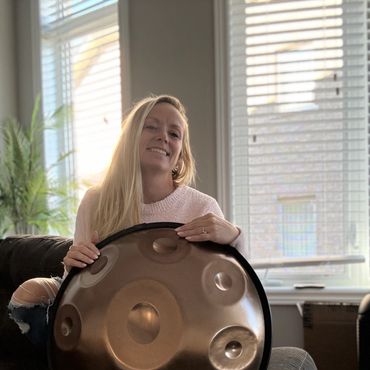
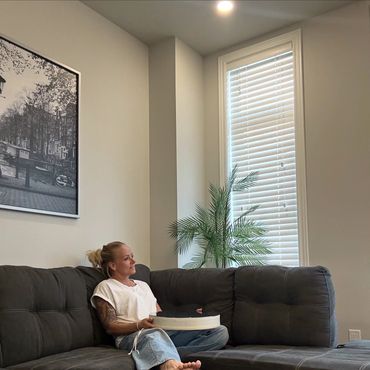
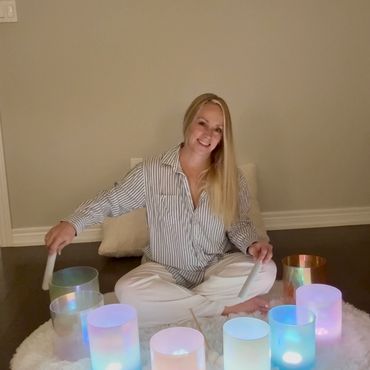
I offer breathwork, meditation, and sound healing sessions in Barrie, Simcoe County, Oro-Medonte, Collingwood, Muskoka, and surrounding areas. Sessions can be experienced privately, in small groups, or through community events.
Brandi Gordon